

Property Taxes

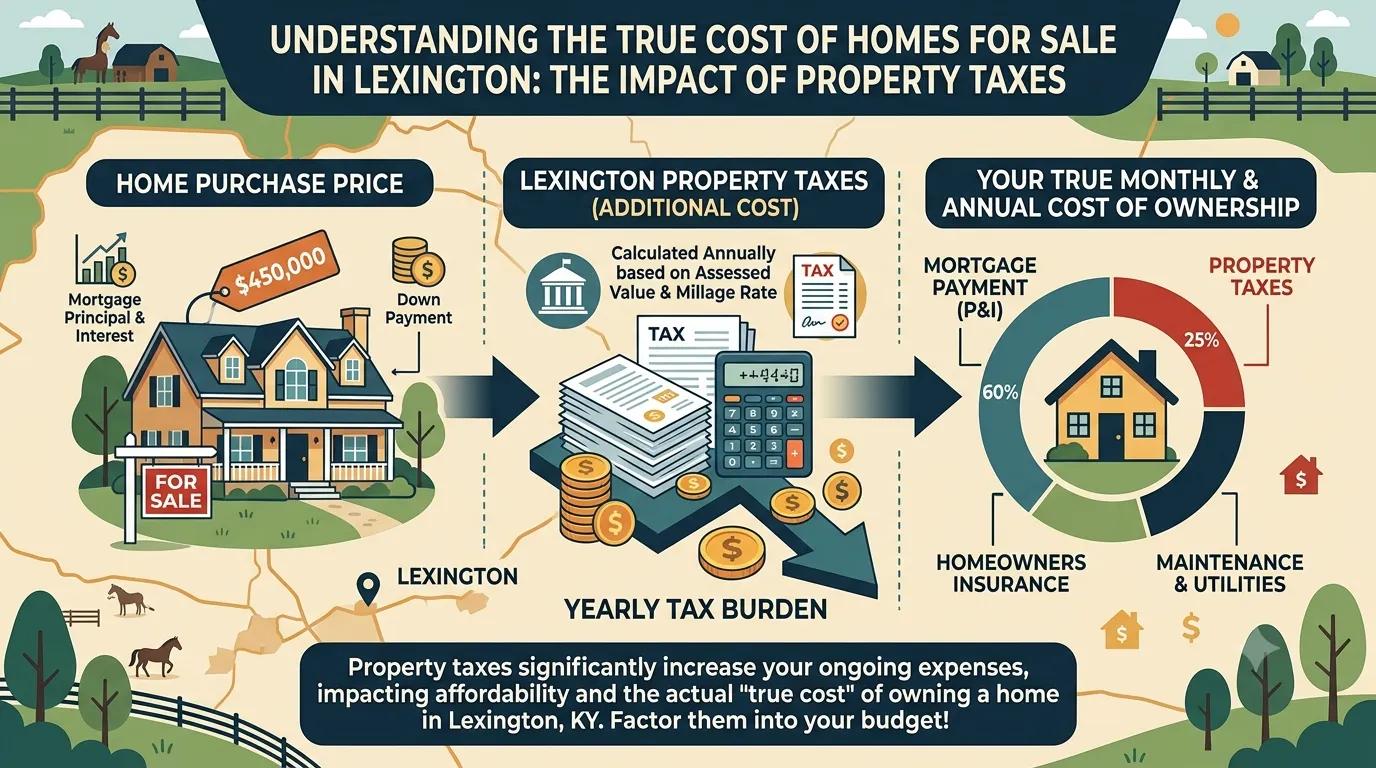
A home’s listing price is only the opening figure in a much larger financial equation. For buyers evaluating homes for sale in Lexington, MA, property taxes can significantly influence what a property actually costs to own year after year. Two homes with similar sale prices may have very different annual expenses once taxes are included.
Understanding how property taxes work in Lexington, MA helps buyers evaluate affordability beyond the purchase price. It also makes it easier to compare Lexington, MA homes for sale based on their long-term financial impact rather than simply choosing the property with the most attractive listing price.
Why Property Taxes Matter When Comparing Home Prices?
Property taxes are an ongoing ownership expense. Unlike closing costs or moving expenses, they do not disappear after purchasing the property. Homeowners generally pay them annually, either directly to the municipality or through a mortgage escrow account.
When comparing homes for sale Lexington in MA, buyers should therefore consider the property tax bill alongside the asking price. A lower-priced property with relatively high taxes may have a higher annual ownership cost than a slightly more expensive home with a lower tax burden.
This distinction is particularly important for buyers working with a fixed monthly housing budget. Property taxes can affect the amount of cash available for maintenance, renovations, utilities, insurance, and other household expenses.
How Lexington Property Taxes Are Determined?
In Massachusetts, property taxes are based on a property's assessed value and the applicable local tax rate. Assessments are intended to reflect the value of real estate for taxation purposes, although an assessed value is not necessarily identical to the current market listing or eventual sale price.
For buyers considering Lexington, MA homes for sale, reviewing the property's recent assessment and tax history can provide useful context. However, the current tax bill should not automatically be treated as a permanent figure. Changes in assessments, municipal budgets, tax rates, or improvements to the property can influence future tax obligations.
This is why buyers should examine more than the number displayed in a listing. Understanding how that number was established provides a more realistic picture of ownership costs.
The Difference Between Listing Price and True Housing Cost
Consider two properties listed at approximately the same price. One may have a lower annual tax obligation, while the other may carry a substantially higher bill. At first glance, both appear equally affordable. Over several years, however, the difference can become significant.
For example, an additional $3,000 in annual property taxes represents $15,000 over five years before considering any changes in the tax bill. For buyers planning to remain in a property for many years, recurring expenses deserve as much attention as the initial purchase price.
When evaluating homes for sale in Lexington, MA, buyers should calculate their estimated monthly mortgage payment and then add property taxes, homeowners insurance, and other recurring costs. This produces a more useful estimate of the property's actual monthly financial commitment.
Property Improvements Can Affect Future Tax Considerations
Renovations and additions can improve a home's functionality and market appeal, but buyers should also understand that substantial improvements may affect future assessment considerations. A finished living area, expanded footprint, or major structural improvement can change the characteristics and potentially the assessed value of a property.
This does not mean buyers should avoid desirable improvements. Instead, prospective homeowners should factor the potential tax implications into renovation budgets and long-term planning.
For buyers comparing Lexington, MA homes for sale, examining the property's size, condition, improvements, and assessment history can help create a more complete financial picture.
What Buyers Should Review Before Making an Offer?
A careful review of property taxes should be part of the due-diligence process. Buyers can examine the current tax bill, assessed value, previous tax information, and any available municipal records. It is also useful to ask whether significant renovations have recently been completed or whether future changes could affect the property's assessment.
Buyers should also avoid assuming that the tax bill of one property will apply to another, even when the homes have similar sale prices. Location, assessed value, property characteristics, and municipal taxation factors can all contribute to differences.
Make the Numbers Part of the Home-Buying Decision
The right home is not necessarily the one with the lowest asking price. It is the property whose purchase price and recurring expenses align with the buyer's long-term financial plan.
For anyone exploring homes for sale Lexington in MA, property taxes should be treated as a core part of affordability, not an afterthought. Reviewing taxes alongside mortgage costs, insurance, maintenance, and expected ownership duration allows buyers to compare properties more intelligently and avoid surprises after closing.
In a competitive market, knowing the true cost of ownership gives buyers a practical advantage. The listing price may open the conversation, but the complete financial picture should guide the decision.