

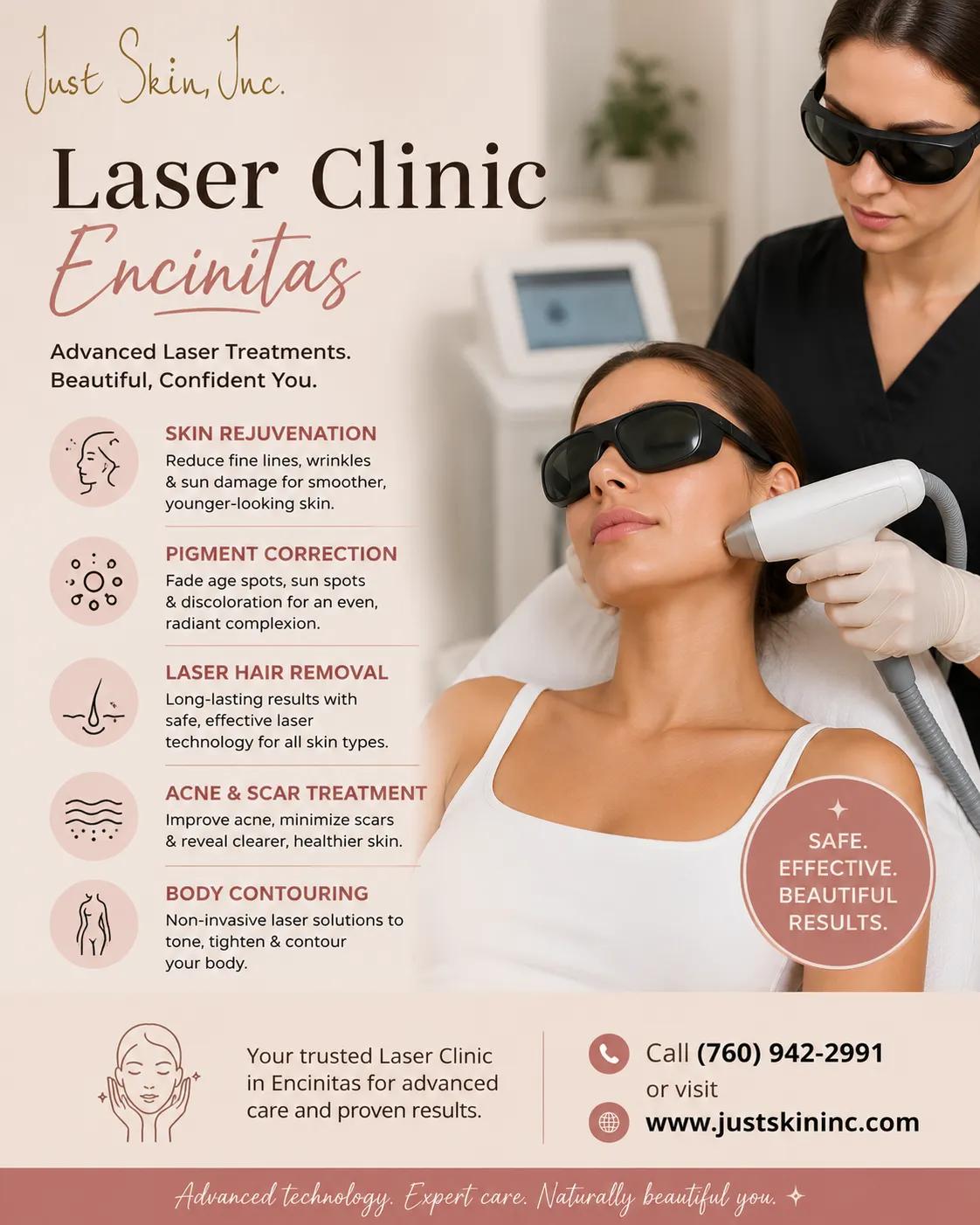
Skin pigmentation can look like a broad problem, but its underlying pattern is often remarkably precise. A sun spot, freckle, or area of unwanted pigmentation may occupy only a small section of otherwise healthy skin. This is where laser technology becomes particularly interesting: instead of treating every layer and every cell equally, certain lasers are designed to identify and act on specific pigment targets.
Understanding this selective process helps explain why modern med spa laser treatments can address pigmentation concerns while limiting unnecessary exposure to the surrounding skin. The key lies in how laser energy interacts with melanin.
Why Melanin Becomes the Laser Target?
Melanin is the natural pigment responsible for much of the color in skin, hair, and eyes. It also absorbs specific wavelengths of light. Laser systems used for pigmentation are selected according to the type and location of the pigment being treated.
When the appropriate wavelength reaches the skin, melanin can absorb a greater proportion of the laser's energy than nearby tissue. This principle is known as selective photothermolysis. The objective is to deliver sufficient energy to the intended chromophore, in this case, melanin, while controlling how much heat reaches surrounding structures.
The laser does not literally "see" a dark spot and automatically avoid everything else. Instead, treatment parameters such as wavelength, pulse duration, fluence, and spot size are carefully selected to create a controlled interaction with the pigment.
What Happens When Laser Energy Meets Melanin?
Think of melanin as a light-absorbing target surrounded by tissue that has different optical properties. When laser energy is delivered at a suitable wavelength, pigment absorbs that energy and converts it into heat.
Depending on the laser technology and pigmentation being addressed, this controlled thermal effect may fragment pigment particles or damage pigment-containing structures. The body's natural healing and clearance processes can then gradually remove the treated pigment.
The surrounding skin is not necessarily unaffected. Some heat will always be distributed beyond the primary target. However, appropriately selected settings are designed to keep this effect within a controlled range. This targeted approach is one reason laser treatment requires professional assessment rather than simply applying the highest available energy.
Why the Entire Skin Does Not Need to Be Treated?
Pigmentation is often localized. Treating the entire surface at the same intensity would therefore expose unaffected skin to energy that may not be necessary.
Laser treatment can instead focus on areas where excess pigment is present. Some systems are designed for precise spot treatment, while others deliver energy over larger areas with parameters intended to address widespread concerns more uniformly.
The distinction matters because different pigmentation patterns require different strategies. A few isolated sun spots may call for a different approach from diffuse pigmentation or uneven skin tone. During professional med spa laser treatments, practitioners evaluate factors such as pigmentation depth, skin type, treatment area, and the specific laser technology being used before determining an appropriate protocol.
Why Skin Type and Pigment Depth Matter?
Melanin is not found only in unwanted pigmentation. It is also a normal component of healthy skin. This creates an important consideration: the laser must interact with excess or targeted pigment without producing excessive thermal injury to surrounding tissue.
For this reason, laser selection and treatment settings are particularly important for individuals with higher levels of baseline melanin. Certain wavelengths and technologies may be more appropriate than others depending on the concern and skin characteristics.
Pigmentation can also exist at different depths within the skin. A superficial epidermal pigment concern may respond differently from pigment located deeper in the dermis. A professional assessment helps determine whether laser treatment is appropriate and what expectations are realistic.
What Makes Laser Treatment a Controlled Process?
Precision does not come from the laser alone. It comes from the combination of technology, treatment parameters, patient assessment, and practitioner expertise.
Before treatment, the practitioner should evaluate the pigmentation and distinguish it from conditions that may require medical assessment rather than cosmetic laser treatment. During treatment, parameters are adjusted according to the target and the individual's skin characteristics. Afterward, appropriate skin care and sun protection are important because treated skin can be more vulnerable to irritation and pigmentation changes.
Those considering laser treatment in Encinitas should therefore look beyond the technology's name and consider whether the provider performs a thorough skin assessment and uses a treatment protocol suited to the specific concern.
The Science Behind Selective Skin Treatment
Laser pigmentation treatment is essentially a controlled exercise in light, absorption, and heat. Melanin's ability to absorb particular wavelengths gives clinicians a way to direct energy toward pigment-containing targets rather than uniformly treating every part of the skin.
That selectivity is what makes modern laser technology so useful for targeted pigmentation concerns. However, successful treatment depends on choosing the right technology and parameters for the individual, not simply using more energy. Professional evaluation remains central to achieving controlled, appropriate results while minimizing unnecessary exposure to surrounding skin.